The Dakar organization has presented the route for the 2027 edition, which will feature 5,320 kilometers of timed specials between January 1 and 15 in Saudi Arabia. This figure is 417 km greater than the previous record in the country, which had been 4,903 km in 2025. No edition on Saudi soil had exceeded the 5,000-kilometer barrier of special stages since the rally moved there in 2020.
David Castera presented the layout at the Institut du Monde Arabe in Paris. The route forms a loop that starts and ends in King Abdullah Economic City, on the Red Sea coast. The design includes three unprecedented stages that explore sectors oriented towards that coastal area.
 Photo By -
Dakar 2027 Stages
| Date | Start | Finish | Stage | Special | Total |
|---|---|---|---|---|---|
| Fri Jan 1 | King Abdullah Economic City | King Abdullah Economic City | Prologue | 30 km | 265 km |
| Sat Jan 2 | King Abdullah Economic City | Yanbu | 1 | 350 km | 500 km |
| Sun Jan 3 | Yanbu | AlUla | 2 | 310 km | 535 km |
| Mon Jan 4 | AlUla | Hail | 3 | 480 km | 745 km |
| Tue Jan 5 | Hail | Hail | 4 | 380 km | 735 km |
| Wed Jan 6 | Hail | Al Duwadimi | 5 | 480 km | 720 km |
| Thu Jan 7 | Al Duwadimi | Marathon Bivouac | 6 | 440 km | 565 km |
| Fri Jan 8 | Marathon Bivouac | Bisha | 7 | 430 km | 480 km |
| Sat Jan 9 | Rest day in Bisha | — | — | — | |
| Sun Jan 10 | Bisha | Bisha | 8 | 460 km | 680 km |
| Mon Jan 11 | Bisha | Wadi Ad-Dawasir | 9 | 460 km | 730 km |
| Tue Jan 12 | Wadi Ad-Dawasir | Bisha | 10 | 515 km | 650 km |
| Wed Jan 13 | Bisha | Marathon Al Bahah | 11 | 480 km | 630 km |
| Thu Jan 14 | Marathon Al Bahah | King Abdullah Economic City | 12 | 455 km | 905 km |
| Fri Jan 15 | King Abdullah Economic City | King Abdullah Economic City | 13 | 50 km | 250 km |
| Total specials: 5,320 km | 5,320 km | 8,390 km | |||
The prologue on January 1 will be 30 timed kilometers. Stage 3 on January 4 will connect AlUla with Hail in one of the longest sections: 480 km of special within a total route of 745 km. Stage 10 on January 12 will be the rally's longest special with 515 timed kilometers between Wadi Ad-Dawasir and Bisha.
Stages 6 and 7 form the first marathon sequence. On January 7, they will depart from Al Duwadimi to a bivouac refuge with 440 km of special, without team assistance. The next day they will complete the leg to Bisha with 430 timed kilometers. This bivouac will be located at an altitude of 2,500 meters.
The second marathon sequence will come in the final phase. On January 13, they will leave Bisha for Al Bahah with 480 timed kilometers, again without mechanical assistance. On January 14, they will close with the return to King Abdullah Economic City in a 455 km special within a total of 905 km, the longest stage in overall distance.
 Photo By A.S.O
More sand, less rock
ASO confirmed that the percentage of sand will be higher than in January 2026, with a proportional reduction of rocky sectors. The adjustment responds to complaints about excessive tire and component wear in the last edition.
Luciano Benavides, winner in the motorcycle category in 2026, explained that he prefers long days and that the second marathon stage at the end limits the information available. Mitchel van den Brink, runner-up in trucks for the last two editions, said that this terrain is better suited to his category due to visibility from the cabin.
"I prefer long days; the second marathon stage at the end limits the information available."
 Photo By A.S.O
Entries open
ASO opened the registration process for Dakar 2027 and the Dakar Classic today. The historic vehicle category has restructured its regulations to better balance the different eras that compete. The changes seek to avoid the advantage that late‑1990s models had shown over older ones.
Prince Khalid Bin Sultan Al-Abdullah Al-Faisal launched the call for the third edition of Saudi Next Gen, the local driver development program. The goal is to repeat the result of Yazeed Al Rajhi in 2025, when he became the first Saudi to win the car category.
The Dakar Future Mission 1000 will also change its dynamic. The organization seeks to raise the sporting performance of prototypes with alternative technologies, which in the previous two editions have remained far from the pace of conventional vehicles.
Comparison with previous editions
The 2026 edition had 4,728 km of specials, almost 600 km less than what is scheduled for 2027. The 2025 figure had been 4,903 km. The first Saudi edition in 2020 had 4,767 timed kilometers. The 2021, 2022 and 2023 editions ranged between 4,200 and 4,500 km.
The main categories retain their structure. Ultimate continues to be the space for T1+ prototypes built specifically for rally raid. Toyota, Ford, Dacia and Mini make up the factory teams. Stock, for production‑derived vehicles, entered its second year under the new FIA regulations approved for 2026. Land Rover officially entered with the Defender Dakar D7X-R based on the OCTA.
Challenger groups the lightweight T3 prototypes that use motorcycle engines and weigh around 1,100 kg. SSV retains the modified side‑by‑sides, where Polaris has dominated recent editions.
The route maintains the separate routes scheme between bikes and cars on several sections, implemented in 2025 to prevent cars from kicking up dust that would affect motorcycle riders' visibility.
Upcoming Races


Ford Returns to the WRC as a Manufacturer

FIA Removes Saudi Arabia from the 2026 WRC Calendar

Toyota Wins Its Tenth Manufacturers' Title at the Rally Chile

Oliver Solberg Leads the Rally Chile Bio Bío Going into the Final Day

Sami Pajari Wins in Paraguay, Securing His Third Consecutive Victory in the WRC

The WRC Paraguay Rally Kicks Off with Pajari in the Lead and Two Withdrawals

Toyota will bring a hydrogen-fuel-cell Hilux to the 2027 Dakar Rally
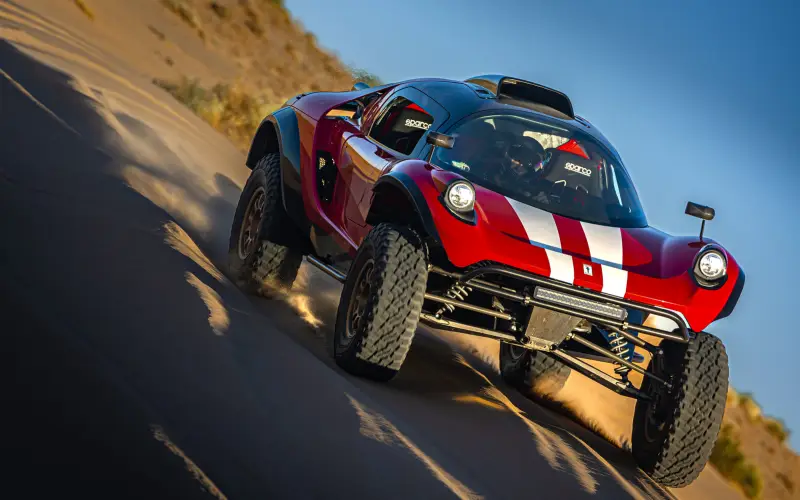
Glickenhaus is bringing its WEC development to off-road racing with the SCG 008

Nasser Al-Attiyah wins the 2026 Dakar Rally with Dacia

Nasser Al-Attiyah wins penultimate stage of Dakar 2026

Lategan loses four hours in Stage 11 of the Dakar Rally, leaving Toyota with no chance of victory
