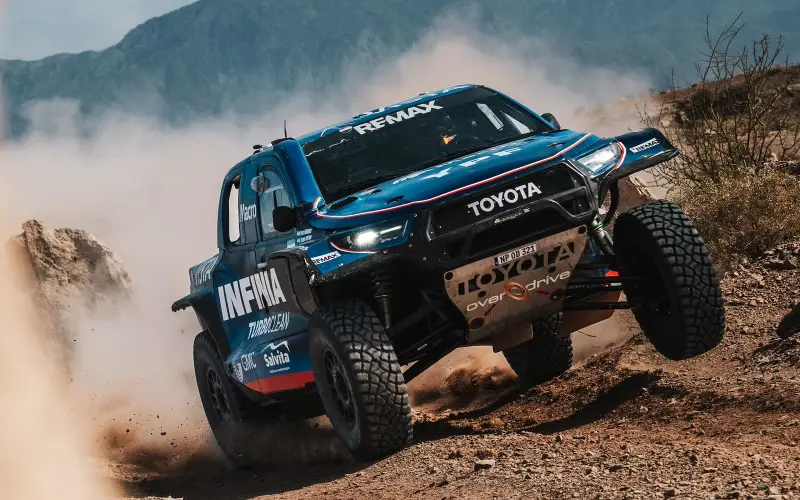
Carlos Sainz and Lucas Cruz will no longer compete together after concluding a 14-year partnership during which they won four editions of the Dakar Rally (2010, 2018, 2020, and 2024), parting ways by mutual agreement at the end of the 2026 edition where they finished fifth overall.
The split comes as the duo accumulates two consecutive editions without positive results: they retired from the 2025 Dakar with Ford and finished fifth in 2026 when a navigation error on the tenth stage took them out of the title fight. Cruz posted "The Last Dance" on his Instagram account immediately after crossing the finish line in Saudi Arabia, foreshadowing the end of their sporting relationship before it was publicly announced.
 Photo By A.S.O
The history between Sainz and Cruz began years before they worked together in rally raid, as the Catalan was already part of Team Carlos Sainz Junior in 2001, the year he won the Spanish Rally Championship with Txus Jaio driving a Ford Focus WRC. Cruz, a computer engineer by training born in Barcelona in 1974, had started as a co-driver in 1994 in the Catalan Rally Championship and had seven years of experience when he joined the Madrid-born driver's team.
Cruz made his first Dakar in 2001 with José Luis Monterde in a Nissan Patrol GR, finishing as the top amateur rookie in the overall standings. That result opened the doors to rally raid for him, although it would take five years to return when in 2006 he participated as a truck co-driver for Volkswagen Motorsport alongside Jordi Pujol.
In 2007, he signed with Mitsubishi to navigate for Nani Roma, a partnership they would maintain in the 2007 and 2009 editions of the Dakar with a tenth place as their best result. They also finished second in the Transiberico Rally and the Baja España in 2007 and 2008, but they never achieved a major victory together.
In May 2009, Cruz returned to Volkswagen to work with Carlos Sainz in rally raid. The start was successful as they won the Rally dos Sertões and the Silk Way Rally that same year, preparing for what was to come in January 2010: their first joint victory in the Dakar, ahead of two other Volkswagen Touaregs driven by Nasser Al-Attiyah and Mark Miller.
 Photo By A.S.O
Four victories with four manufacturers
The 2010 victory was the first for a Spanish driver in the car category of the Dakar, but it would not be the only one for Sainz and Cruz. In 2011 they finished second, beaten by Al-Attiyah who was their teammate at Volkswagen, creating internal tension within the German team.
Cruz left with Al-Attiyah in 2012 to navigate for the Qatari driver for three seasons. They retired from the Dakar in 2012 and 2013, but in 2014 they achieved third place with Mini, winning two stages. That podium was enough for Cruz to prove he could compete at the highest level with different drivers, not just with Sainz.
In 2015, Cruz returned with Sainz when the Madrid-born driver signed with Peugeot for the French brand's return to the Dakar. The Peugeot 2008 DKR had problems in its first edition and they retired, but the buggy was completely redesigned for 2016, presenting itself as one of the favorites.
They retired again in 2016 and 2017, although in 2018 they achieved their second victory in the Dakar. Victories in 2020 with Mini and 2024 with Audi completed Sainz's record as the only driver to have won the rally with four different manufacturers. In 2021 they finished third, their last podium before recent troubles.
 Photo By Red Bull Content Pool
Two consecutive editions without fighting for victory
The 2023 Dakar ended in retirement while Sainz was competing with Audi, the car with which he would win in 2024. In 2025, now with Ford, they retired again. In 2026, they reached stage 10 with chances to fight for victory, but the navigation error on the return leg of the second marathon stage left them fifth overall.
Ford placed three cars in the top five of the 2026 Dakar, confirming they have a competitive package, but Sainz and Cruz could not fully capitalize on it. The Madrid-born driver's contract with Ford expired at the end of the rally, although the American firm wants to renew for 2027.
 Photo By A.S.O
Sainz is 62 years old with no confirmed co-driver
Replicating the chemistry he built with Cruz over 14 years will not be easy for Sainz, who is now 62 years old and must decide whether it is worth seeking a new navigator or retiring with four victories that equal Stéphane Peterhansel's record in the car category of the Dakar.
The market for elite navigators is limited, and building the necessary synchronization between driver and co-driver takes time, considering that Sainz competes in three preparation rallies each year before the Dakar: Portugal, South Africa, and Morocco.
 Photo By Red Bull Content Pool
-
 Carlos Castillo Sansabas

Upcoming Races
Drivers Standings 2026
| POS | PILOTO | PTS | ↕ |
|---|---|---|---|
| 1 | Sébastien Loeb | 114 | |
| 2 | Nasser Al-Attiyah | 111 | |
| 3 | Seth Quintero | 101 | |
| 4 | Nani Roma | 59 | |
| 5 | Lucas Moraes | 57 | |
| 6 | Henk Lategan | 56 | |
| 7 | Mattias Ekström | 53 | |
| 8 | Joao Ferreira | 52 |
Manufacturers Standings 2026
| POS | CONSTRUCTOR | PTS | ↕ |
|---|---|---|---|
| 1 | The Dacia Sandriders | 315 | |
| 2 | Toyota Gazoo Racing W2Rc | 250 | |
| 3 | Ford Racing | 175 |

The WRC confirms a 15-rally calendar for 2027

Elfyn Evans Wins the 2026 WRC Title at the Rally Italia Sardegna

Ford Returns to the WRC as a Manufacturer

FIA Removes Saudi Arabia from the 2026 WRC Calendar

Toyota Wins Its Tenth Manufacturers' Title at the Rally Chile

Oliver Solberg Leads the Rally Chile Bio Bío Going into the Final Day

The W2RC announces its 2027 schedule with five events
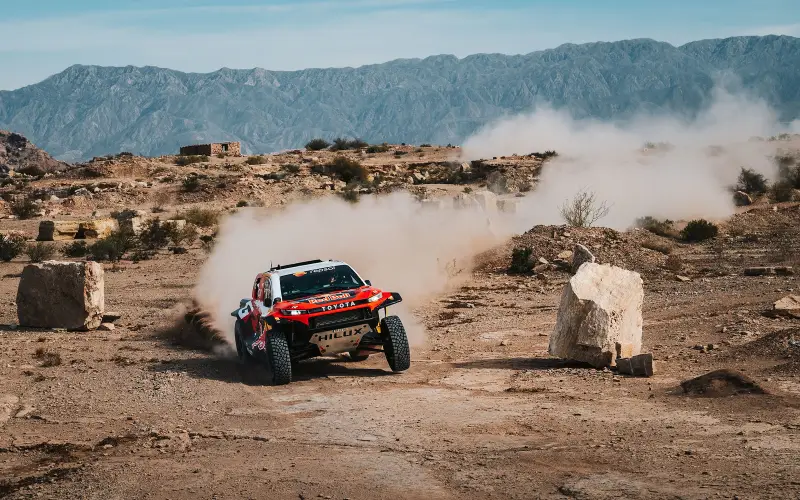
Seth Quintero wins the Desafío Ruta 40, his first victory in Ultimate
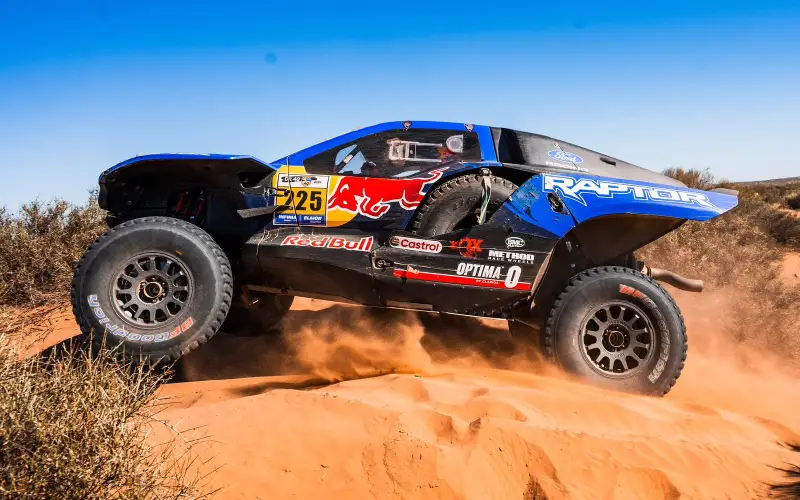
Sainz wins Stage 4 and Quintero is the new leader of the Desafío Ruta 40
Henk Lategan wins Stage 3 of the Ruta 40 and takes the lead
Al-Attiyah wins the second stage of the Desafío Ruta 40